
The Question Owners Keep Asking
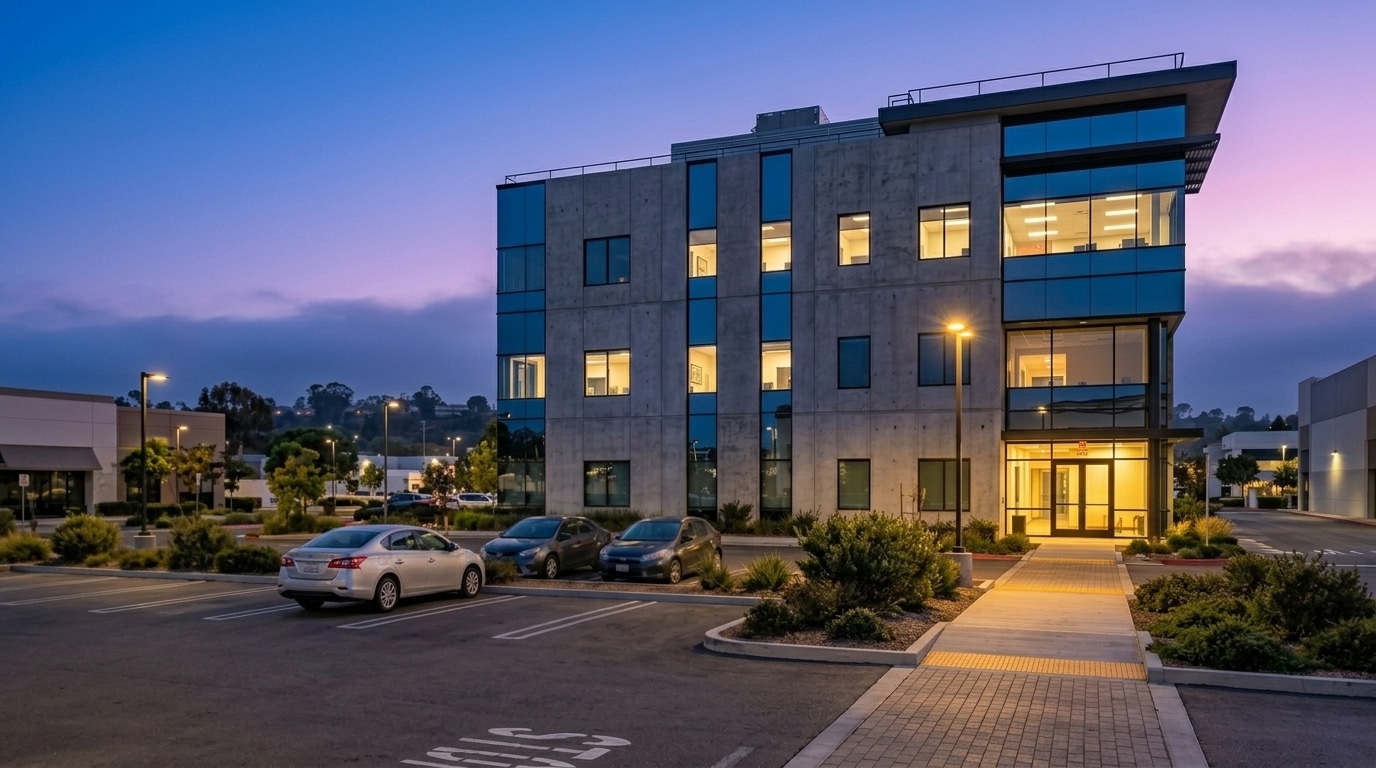
Three months into 2026, the calls coming in from owners have changed shape. The question is no longer how much rent is moving. The question is whether the building they are sitting on is still the building they thought they owned in 2019.
That is a different conversation. And it is the one this article is for.
What follows is a working operator's view of the San Diego office market in May 2026, written for owners holding Class A, Class B, and converted creative office in our submarkets. Submarket data shows up where it matters. The point of the piece is the decisions, not the survey.
Why the Countywide Number Tells You Almost Nothing
Countywide office vacancy is sitting in the low-to-mid 20s percent range, pending verification against the latest CoStar Q1 2026 report. Direct asking rents are largely flat year over year.
Both numbers are accurate. Neither is useful.
Vacancy averaged across San Diego County folds together top-tier UTC product, decade-old Class B in Kearny Mesa, and converted-lab supply that drifted back onto the office market from Sorrento Valley. Three different markets, three different absorption profiles, one number. In most cases, that single number tells an owner almost nothing about the asset they are actually holding.
The right unit of analysis is the building. The submarket is the second-best unit. The countywide figure is, more often than not, the headline for a piece an owner does not actually need to read.
Three Positions Your Building Could Be Sitting In
After walking enough buildings, the patterns thin out. Most office assets in San Diego in 2026 are sitting in one of three positions. Honest assessment of which one is more useful than any number on a market report.
Position 1: Top-tier product holding pricing power. Class A trophy stock in UTC and Del Mar Heights, where professional services firms have been consolidating space and trading footprint for quality. Concessions are present, but not as deep as in B-grade product. Owners here have renewal leverage. The risk is complacency. Tour activity is masking how thin the depth of demand actually is, and the gap between the first qualified tour and the fifth is wider than it looks on paper.
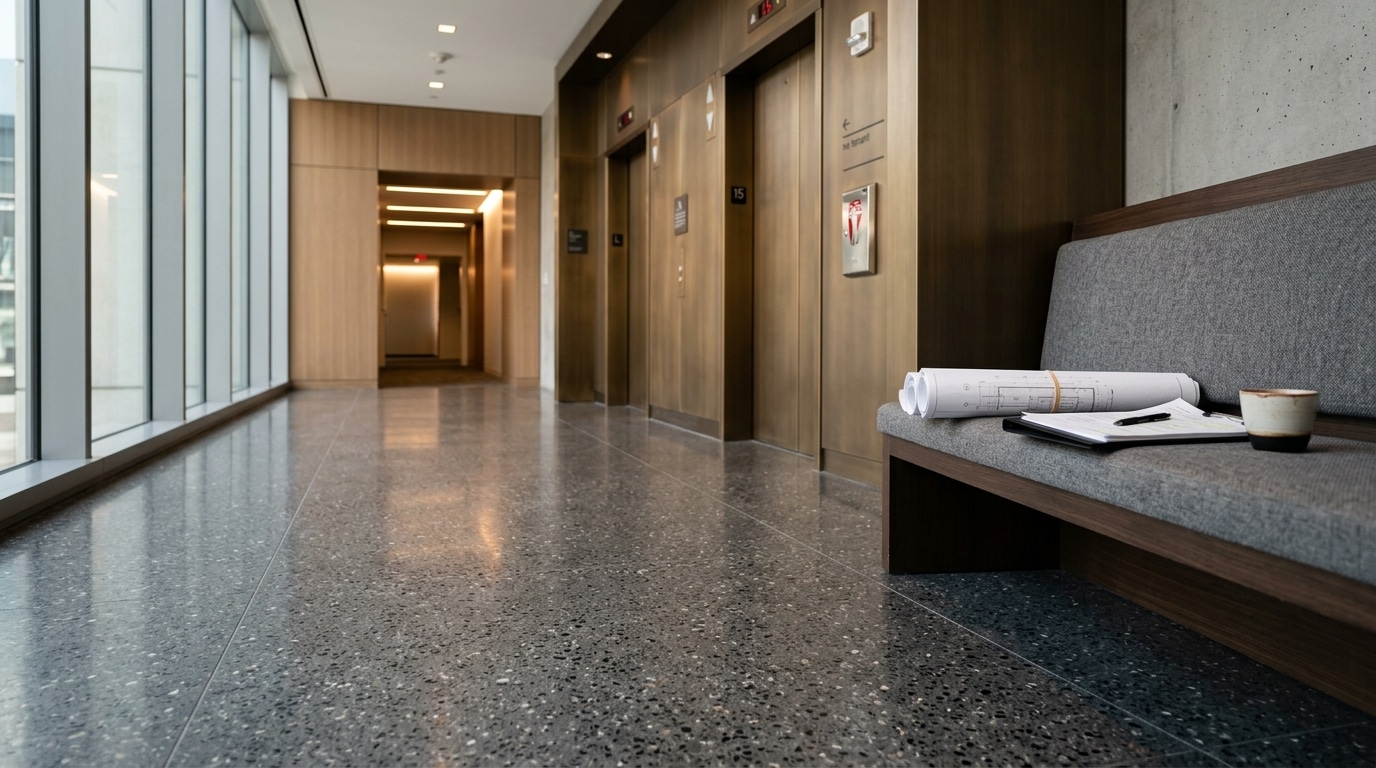
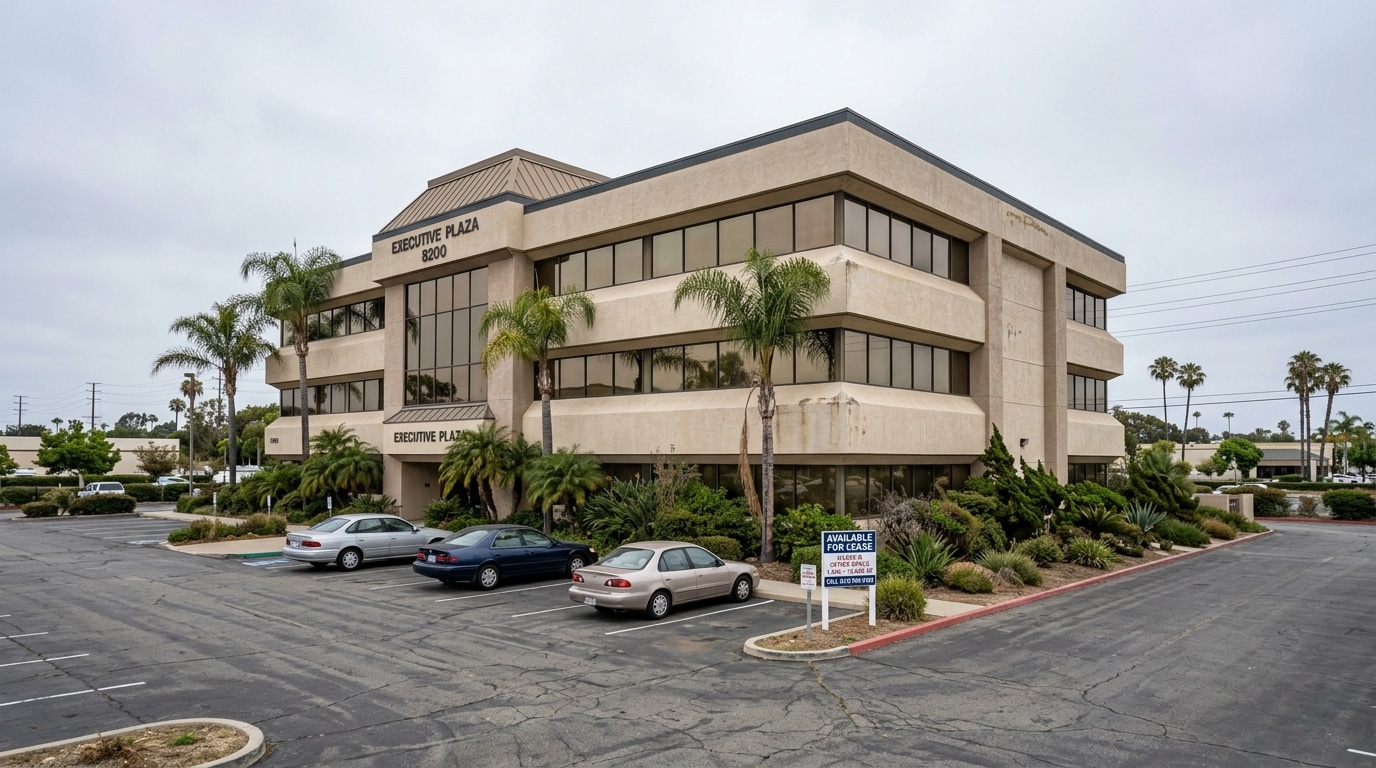
Position 2: Class B stock competing on every line item. This is where the reset is concentrated. Kearny Mesa, Mission Valley, parts of Downtown. Older Class B office is competing with itself on rent, on free rent, and on TI dollars. Tours get scheduled within days, but they get filtered before they happen. Common areas, restrooms, elevator cabs, and HVAC condition do the screening. A 1990s common-area package against a 2023 refresh is not a fair fight at any rent.
Position 3: Repositioning candidate, with the clock running. The third group is the most interesting, and the most expensive to misread. These are buildings that were converted (or were on the cusp of being converted) to life science, lost that demand pool, and are now back in the office market. Sorrento Valley and Sorrento Mesa carry most of these. Pricing is the most fluid in the county. So is the underwriting. An owner in this position is making a real strategic call: stabilize as office, market for conversion, or hold and wait. Each path has a different capital number attached.
There is a quieter fourth position worth naming. Carlsbad and North County have smaller floorplates, owner-user activity, and a higher mix of medical office. The result is a steadier absorption story than the central submarkets. Less drama, more durability. If your asset sits here, the operating questions are different. They are mostly about preventative maintenance and tenant retention, not repositioning.
The Sublease Wave Has Already Broken
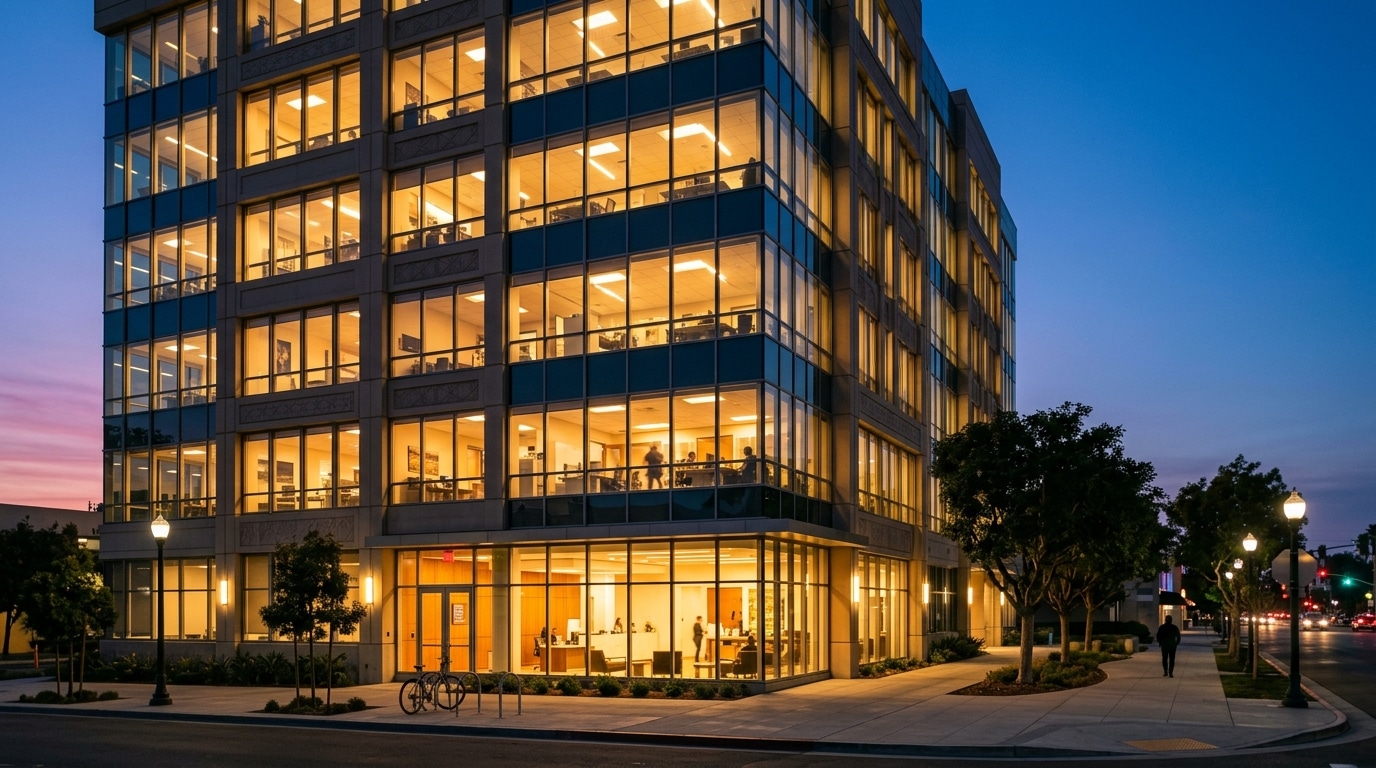
The sublease overhang that defined 2023 and 2024 has materially worked through the system. What remains is older, longer-dated, and concentrated in a smaller number of buildings.
That matters in two specific ways.
First, direct deals are once again the primary form of competition, which makes underwriting more predictable. The chaos of competing against a tenant trying to dump space at any price has thinned out.
Second, the sublease tenants who survived the contraction are now signing direct leases at the end of their sublease terms. Those renewals are a quiet source of stabilization that does not show up in net absorption numbers.
So the market is not tightening. It is also not getting worse. Something quieter is happening: it is normalizing. That is a different exercise to manage through than either a boom or a true bust, and most of the playbooks an owner is reading right now were written for one of those two scenarios.
Five Conversations Worth Starting Before Year-End

The questions worth working through with owners in this market are not glamorous. They are the questions that decide whether the next twelve months produce a stabilized asset or one that slowly slips a notch.
1. A current Broker Opinion of Value. Underwriting from 2021 or 2022 is no longer a useful anchor for any hold-versus-sell conversation. A BOV grounded in 2026 comps gives you a real number to make a real decision from. If your last BOV is more than eighteen months old, that is the starting point.
2. An honest read of your competitive set. Pull the last six months of comps for buildings within a one-mile radius of yours. Know where you sit on rent, on TI allowance, and on free rent. If you are above the market on any of the three, know why. This is the conversation that catches the buildings drifting upward on quoted rates while losing the tour war on TI dollars.
3. A walk-through before any space goes to market. Restrooms, elevator cabs, lobby finishes, HVAC condition. Tours get filtered on these before they ever happen. Quoted rent is not the variable an owner thinks it is in this market.
4. A construction-side pressure test on TI dollars. Build-out costs have not retraced. Concession packages quoted in dollars-per-foot can still produce partial scope at 2026 pricing. We review every TI scope through a licensed General Contractor's lens (Lic. #1051408) before it goes back to a tenant. The gap between quoted allowance and actual delivered scope is where deals quietly come apart.
5. A renewal conversation that starts twelve to eighteen months out, not six. The cost of a known renewal is materially lower than the cost of downtime plus TI in this market. Renewal conversations that begin earlier are converting at meaningfully better terms.
Variables Outside an Owner's Control in 2026
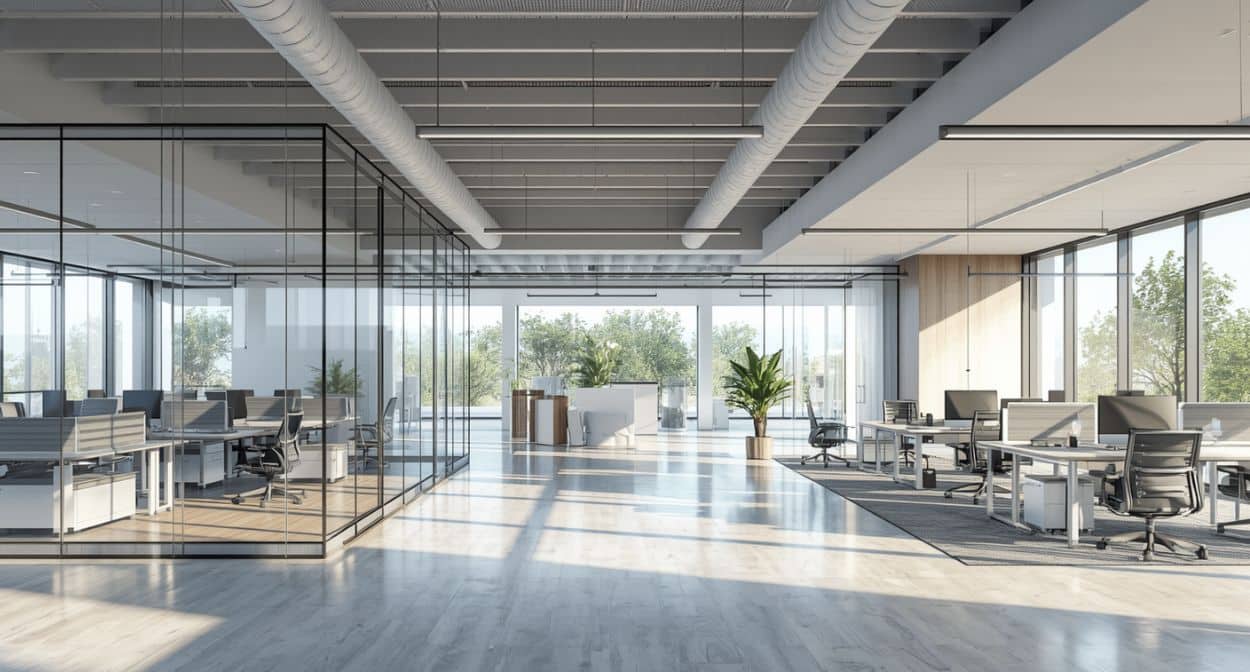
Three things are most likely to move San Diego office pricing over the back half of 2026: interest rates, the pace of life-science recovery, and the cadence of return-to-office mandates from larger employers anchored in our county. None of these are inside an owner's control.
What is inside the owner's control is the operational and physical condition of the asset when the next leasing cycle arrives. That is where the work between now and year-end matters most, and that is where the five questions in the previous section actually get answered.
Where We Come In
ScottWay Commercial manages and advises on office, retail, industrial, and mixed-use assets across San Diego County and greater Southern California. We bring a Broker of Record's view of the market (DRE #01777939) and a licensed General Contractor's view of the building (Lic. #1051408) under one accountable partner. The rent strategy, the renovation scope, and the financial reporting get evaluated together rather than handed across firms.
If you are weighing a renewal, a repositioning, or a hold-versus-sell decision on a San Diego office asset, we are happy to put a current view in front of you. Call (619) 209-3544 or request a property review at scottwaycre.com.