
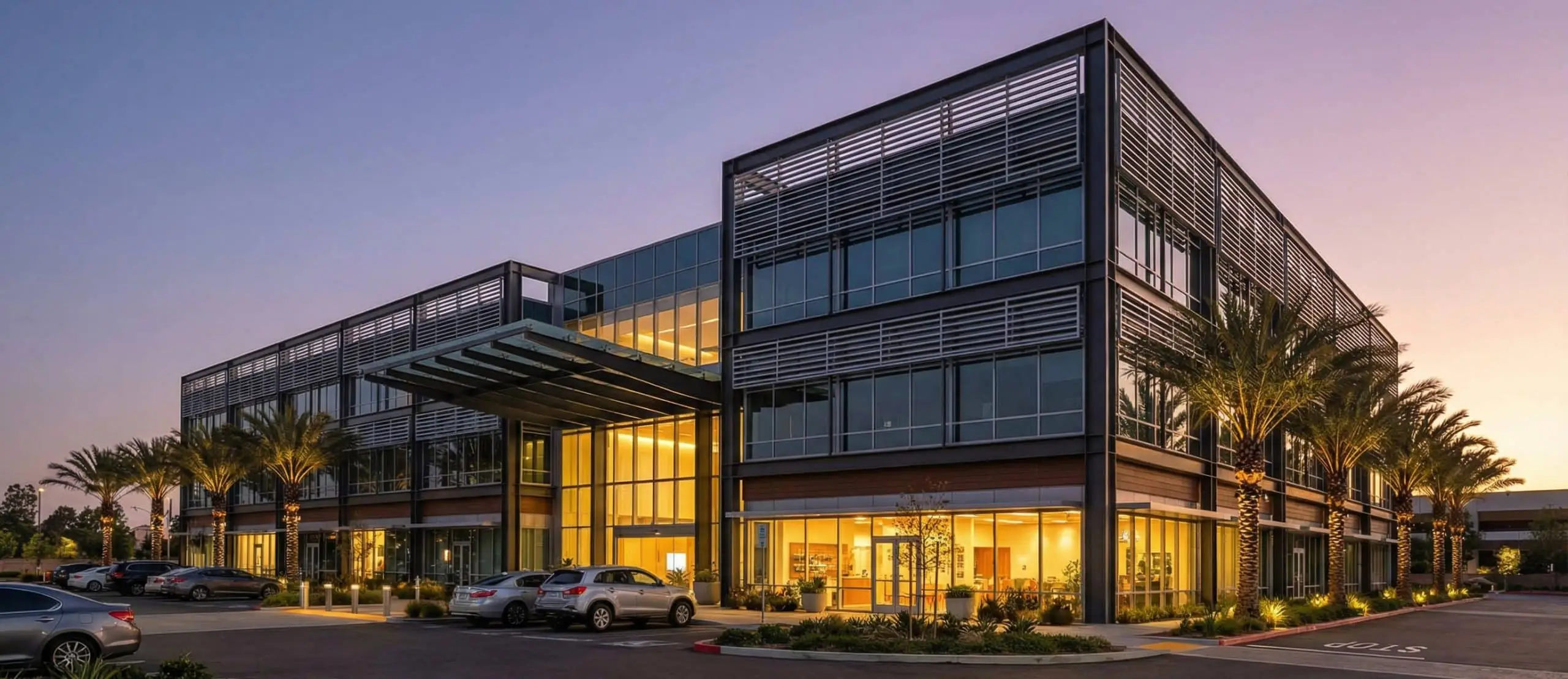
SAN DIEGO · OWNER’S GUIDE
Commercial Building Maintenance in San Diego
Protecting NOI, managing risk, and preserving long-term asset value. A practical guide for commercial property owners.
The Short Answer on Commercial Building Maintenance in San Diego
Commercial building maintenance is not simply an operating expense. It is part of the financial management of the asset.
An effective maintenance program helps ownership identify problems early, reduce avoidable failures, understand future capital requirements, protect tenant experience, and make better-informed decisions about when to maintain, repair, or replace building systems.
The objective is not necessarily to minimize maintenance spending. It is to deploy maintenance dollars where they best support reliable operations, sustainable Net Operating Income (NOI), and long-term asset value.
That requires building maintenance, property management, financial oversight, construction knowledge, and capital planning to work together.
Commercial Building Maintenance at a Glance
For commercial property owners, effective maintenance generally involves five interconnected responsibilities.
Preventive Maintenance
Inspecting and servicing building systems before avoidable failures occur.
First-Line Diagnosis
Evaluating reported problems before automatically dispatching a specialty contractor.
Repair & Specialty Trade Coordination
Completing appropriate routine work in-house and engaging qualified specialists when needed.
Documentation & Trend Analysis
Tracking repairs, recurring problems, equipment condition, and costs over time.
Capital Planning
Using maintenance information to anticipate major repairs and replacements before they become emergencies.
Together, these activities allow maintenance decisions to become part of the property’s broader financial and ownership strategy.
Commercial Building Maintenance in San Diego
Commercial properties in San Diego face maintenance considerations that differ from those in many other markets. The region’s relatively mild climate does not eliminate building-maintenance requirements.
Coastal exposure, ultraviolet degradation, irrigation, water intrusion, roofing conditions, HVAC operating patterns, landscaping, aging building stock, and differences among local commercial submarkets can all influence maintenance and capital planning.
Property Type Matters
A multitenant office building in Sorrento Mesa may have elevators, common-area HVAC, extensive landscaping, restrooms, tenant improvements, and significant shared building systems. An industrial or flex property may have fewer common areas but larger roof surfaces, warehouse equipment, loading areas, paving, and different tenant maintenance responsibilities.
Buildings closer to the coast may face different exterior and corrosion considerations than properties farther inland. Older properties may require an entirely different maintenance and capital strategy from recently constructed assets even when the buildings are similar in size.
For San Diego commercial property owners, maintenance planning therefore should begin with the actual property rather than a generic national benchmark. Historical expenses, building age, equipment condition, lease responsibilities, anticipated tenant improvements, local contractor costs, and ownership objectives should all be considered when establishing an operating maintenance budget and long-term capital plan.
Local market knowledge matters because building maintenance is ultimately performed at the property, not on a national spreadsheet.
What Does Commercial Building Maintenance Include?
Commercial building maintenance encompasses the inspection, servicing, repair, and replacement activities required to keep a property safe, functional, reliable, and competitive. Depending on the property, that may include:
- HVAC equipment and controls
- Roofing and waterproofing
- Plumbing systems
- Electrical systems
- Fire and life-safety equipment
- Elevators
- Parking areas
- Exterior lighting
- Landscaping and irrigation
- Building envelopes and glazing
- Common areas and restrooms
- Access and security systems
- Tenant spaces
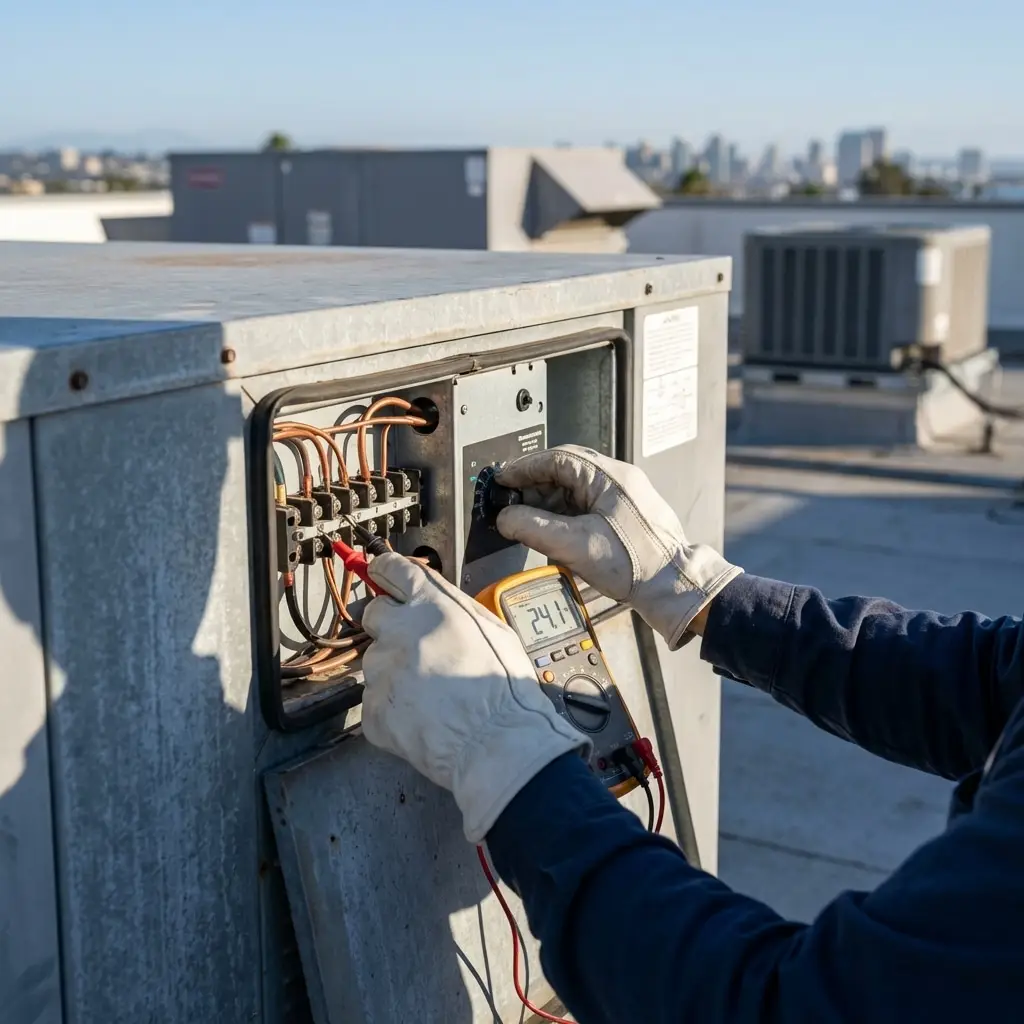
But maintaining physical systems is only part of an effective maintenance program.
A disciplined program also requires equipment inventories, inspection schedules, service histories, documentation, vendor management, budgeting, prioritization, system-condition assessments, and capital planning.
ASHRAE Standard 180 reflects this systematic approach for commercial HVAC systems. The standard establishes minimum inspection and maintenance requirements intended to preserve thermal comfort, energy efficiency, and indoor air quality.1
A building should be managed as a system, not simply as a collection of repair requests.
That changes the question from what needs to be fixed today? to what does the condition of the building tell us about what ownership should be planning for tomorrow?
Reactive, Preventive, and Predictive Maintenance
Not every building component should be maintained using the same strategy. Three broad approaches are commonly used.
Reactive Maintenance
Reactive maintenance means allowing an item to operate until it fails and then repairing or replacing it. For inexpensive, noncritical components, this can be completely reasonable. There may be little financial justification for repeatedly inspecting a low-cost item that can be replaced quickly without meaningful disruption.
The problem occurs when the same strategy is applied to critical or expensive building systems. The U.S. Department of Energy’s Federal Energy Management Program describes reactive maintenance as essentially a run-to-failure approach and identifies potential disadvantages including increased labor costs, secondary damage, emergency repair or replacement expense, and inefficient use of personnel.2
Preventive Maintenance
Preventive maintenance involves scheduled inspection and servicing intended to maintain performance and identify deterioration before failure.
Commercial HVAC service is a familiar example. Filters are replaced. Belts and electrical components are inspected. Coils are cleaned. Operating conditions are evaluated. Developing problems can sometimes be identified before tenants experience a loss of heating or cooling.
Preventive maintenance does not guarantee that equipment will not fail. It improves the probability that deterioration will be identified and addressed under controlled conditions.
DOE/FEMP guidance cites studies estimating that preventive-maintenance programs can reduce maintenance costs by approximately 12%–18% compared with primarily reactive programs.2 Those figures should not be interpreted as guaranteed savings for an individual commercial property. Actual results depend on the building, equipment, existing maintenance practices, labor structure, and operating environment.
Planned maintenance can often be less expensive than unplanned failure.
Predictive or Condition-Based Maintenance
Predictive maintenance goes a step further. Instead of maintaining equipment solely according to a calendar, management uses actual operating conditions or measured performance to determine when intervention is appropriate.
That can include vibration analysis, thermography, equipment monitoring, building automation data, pressure and temperature trends, and other diagnostic tools. DOE describes predictive maintenance as using quantified equipment condition to determine when maintenance is needed.2
For sophisticated properties and critical systems, this can be valuable. For a small, inexpensive component, it may make no economic sense at all.
The better philosophy is not “preventive maintenance is good; reactive maintenance is bad.” It is: apply the appropriate maintenance strategy according to the cost, condition, criticality, and consequence of failure of the particular building system.
Preventive Maintenance Is Really About Predictability
Preventive maintenance is sometimes presented as though spending money today eliminates future capital expenditures. It does not.
Every mechanical system eventually reaches the end of its useful life. Roof membranes deteriorate. Parking lots age. Pumps fail. Controls become obsolete. Building finishes wear. Preventive maintenance cannot eliminate those realities.
What it can do is make many of them more visible and, in some cases, more predictable.
Consider an HVAC system. Regular inspection may help extend equipment life and reduce unexpected failures. But it also produces something equally valuable: information.
Management begins to understand which units are experiencing recurring issues, which components are deteriorating, where repair costs are increasing, and which systems should begin appearing in future capital budgets.
Instead of discovering on a hot Monday morning that a major piece of equipment has failed, ownership may have sufficient warning to evaluate replacement options, obtain competitive proposals, determine reserve requirements, and schedule the work around tenant needs.
The conversation changes from “how quickly can we fix this?” to “when should we replace this, what should we budget, and how does that expenditure fit into our plans for the property?”
How Maintenance Affects NOI
Net Operating Income is fundamentally straightforward:
Property Revenue − Operating Expenses = NOI
Because maintenance generally affects operating expenses, reducing maintenance spending can improve current-period NOI. But that does not necessarily mean it improves the economics of the property.
EPA ENERGY STAR identifies effective operations and maintenance as a means of reducing operating costs, reducing the risk of early equipment failure and unscheduled downtime, maintaining occupant comfort, and supporting NOI.3
Consider an owner who reduces maintenance expenditures by $30,000. Assuming everything else remains equal, current NOI increases by $30,000. But everything else may not remain equal.
If that reduction contributes to higher energy consumption, emergency service calls, accelerated equipment deterioration, tenant complaints, water intrusion, or premature replacement, the apparent savings can eventually become a larger expense. At the opposite extreme, performing unnecessary maintenance or replacing functional equipment prematurely can also reduce returns.
The lowest maintenance expense does not necessarily produce the highest sustainable NOI.
The objective should be to identify the level of maintenance that supports reliable building operations while controlling unnecessary expense and protecting the longer-term economic performance of the asset.
Deferred Maintenance: When Does Waiting Become Expensive?
Many building issues do not require immediate action. A roof may show deterioration but not leak. A parking lot may be cracked but remain serviceable. An HVAC unit may be approaching the latter part of its expected service life while still operating. Exterior sealants may be deteriorating without visible interior water damage.
Can the work wait? Possibly. The more useful question is: what is the financial and operational consequence if it does?
Roofing
A relatively contained roof repair may prevent water intrusion from affecting insulation, ceilings, electrical systems, or tenant improvements.
HVAC
A deteriorating component identified during scheduled service may be replaced under controlled conditions rather than during a peak-weather failure.
Waterproofing
Addressing sealant or envelope deterioration early may prevent moisture from reaching areas where remediation becomes significantly more complicated.
Parking Areas
Crack repair, drainage corrections, and appropriate surface maintenance may help delay more extensive pavement rehabilitation.
The correct decision is not always immediate repair. Some conditions should be monitored. Some should be maintained. Some should be repaired. Some components should be replaced. And certain inexpensive, noncritical items may reasonably be allowed to operate until failure.
The value of professional property management lies partly in distinguishing among those decisions.
How Maintenance Should Inform Capital Planning
One weakness in commercial property operations is treating the annual maintenance budget and long-term capital plan as separate exercises. They should inform each other.
Maintenance activities generate information about physical condition. Physical condition should inform capital planning. A useful framework is:
Inspect → Assess → Prioritize → Budget → Execute → Document → Reassess
A rolling capital plan can then organize anticipated work into different time horizons.
0–12 Months: Immediate Priorities
Safety issues, operational problems, active deterioration, tenant-impacting conditions, and systems at elevated risk of failure.
1–3 Years: Near-Term Capital Requirements
Significant repairs or replacements that can reasonably be anticipated and incorporated into budgeting and reserve planning.
3–5+ Years: Longer-Term Asset Planning
Major building systems that remain operational but may require investment within ownership’s anticipated holding period.
Five Categories of Expenditure
A rolling plan also creates an important distinction among expenditures, each with different financial and strategic implications.
- Routine Maintenance: Recurring work intended to keep existing systems operating.
- Corrective Maintenance: Repairs required after a component no longer performs properly.
- Deferred Maintenance: Necessary work ownership has intentionally postponed.
- Capital Replacement: Replacement of significant building systems or components.
- Strategic Improvement: Discretionary capital deployed to improve efficiency, tenant experience, market position, or investment performance.
Maintenance vs. CapEx: What’s the Difference?
Owners frequently describe a repair as “maintenance” and a replacement as “CapEx.” That is useful operational shorthand, but accounting and tax treatment is more nuanced.
IRS tangible-property regulations generally permit deductions for qualifying repair and maintenance expenses while requiring capitalization of expenditures that constitute improvements. For buildings, the IRS evaluates the building structure and specified building systems separately and considers whether expenditures result in a betterment, restoration, or adaptation to a new or different use. The IRS also provides a routine-maintenance safe harbor under specified circumstances.4
A property manager’s operational classification therefore should not be assumed to determine the ultimate accounting or tax treatment. Owners should coordinate significant expenditures with their CPA or tax advisor.
Maintenance records should provide enough information for ownership and its advisors to understand what work was performed, why it was performed, what building system was affected, and what the expenditure accomplished.
Good documentation supports both asset management and financial reporting.
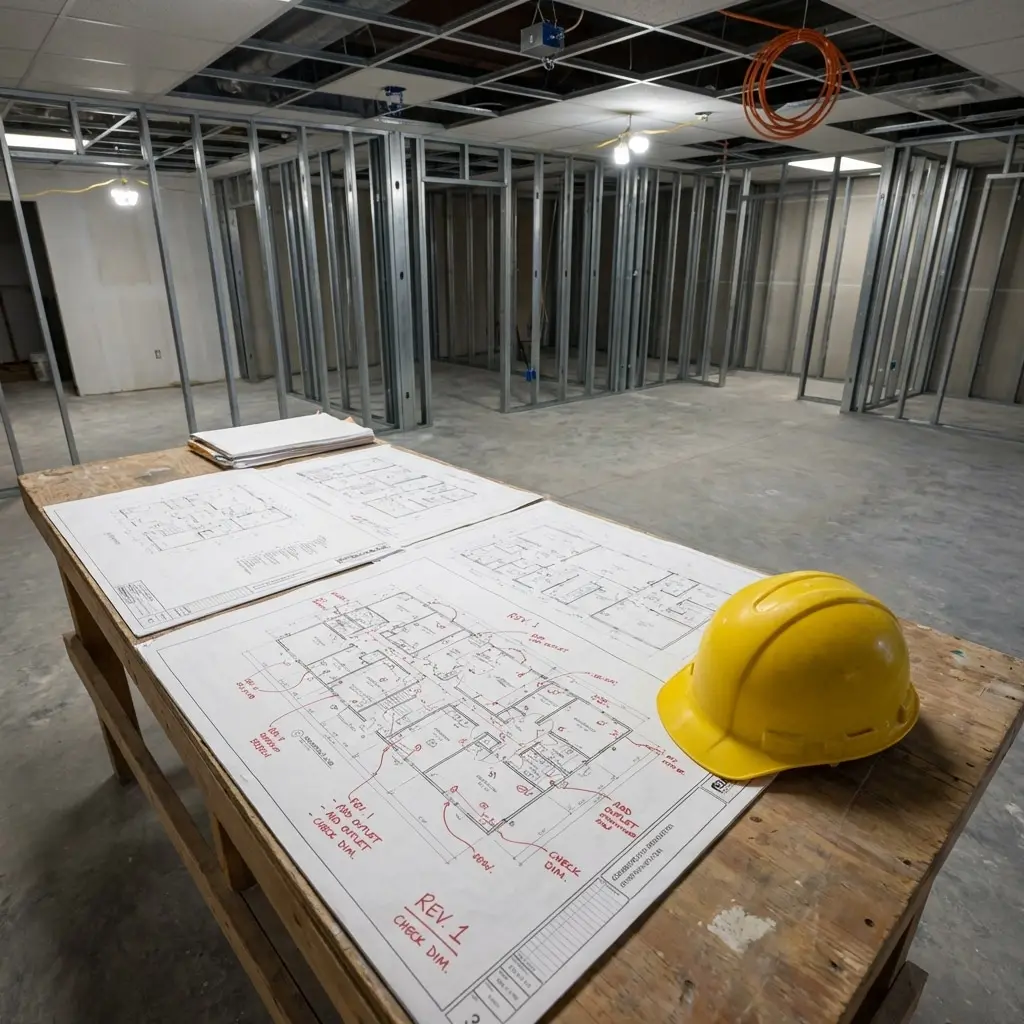
Why Construction Expertise Matters in Property Management
Many commercial maintenance decisions eventually become construction decisions.
A roof leak may require a localized repair, or it may reveal a larger roofing problem. An aging HVAC unit may justify another repair, or replacement. Recurring plumbing problems may be isolated, or evidence of a broader system issue. A tenant improvement may begin as a leasing requirement and become a significant capital investment.
When evaluating a repair or capital project, management should be able to ask:
- What is actually causing the problem?
- Does the proposed scope address the cause or only the symptom?
- Is repair reasonable, or has replacement become more economical?
- Are competing contractors pricing the same scope?
- What related systems could be affected?
- Can this project be coordinated with other planned work?
- How will the work affect tenants?
- What is the expected useful life of the proposed solution?
- What happens if ownership postpones the work?
Construction knowledge does not eliminate the need for qualified engineers, architects, specialty contractors, or other professionals when their expertise is required. It does, however, improve the property manager’s ability to identify the nature of a problem, determine the appropriate initial response, and recognize when specialized expertise is needed.
That leads to another important part of an effective commercial maintenance program: not every building issue should automatically result in a specialty contractor being dispatched.
Maintenance Triage: Diagnose Before You Dispatch
When a tenant or building system reports a problem, the first question should not necessarily be “which contractor should we call?” A better first question is “what is actually happening?”
An integrated property management and maintenance platform can provide an initial layer of evaluation before automatically sending every issue to an outside specialty contractor.
The concept is similar to the relationship between a primary care physician and a specialist. A primary care physician evaluates the condition first. Many issues can be addressed at that level. When the condition requires specialized expertise, the patient is referred to the appropriate specialist.
Commercial building maintenance can operate similarly. The first objective is to understand the reported condition, identify its likely cause, and determine the appropriate level of response.
Consider an HVAC Complaint
A tenant reports that an office is too warm. That does not necessarily mean an HVAC contractor needs to be dispatched immediately. An initial evaluation may identify:
- An incorrect thermostat setting
- A dirty filter
- A tripped breaker
- A blocked supply or return register
- A basic control issue
- Another relatively straightforward condition
If the initial evaluation instead suggests a compressor problem, refrigerant issue, control-system failure, or another condition requiring specialized HVAC expertise, the appropriate contractor can then be engaged.
The Same Approach Applies Elsewhere
Plumbing. A reported plumbing problem may involve a relatively simple fixture, valve, or drain issue. It may also require a licensed plumbing contractor.
Electrical. A lighting problem may involve a lamp, fixture, switch, timer, or breaker. It may also indicate an electrical condition requiring a licensed electrician.
Water Intrusion. Water appearing inside a building might originate from plumbing, roofing, irrigation, condensation, drainage, or the building envelope. Immediately calling a roofer simply because water is visible at the ceiling may result in sending the wrong trade to the property. Identifying the probable source before dispatching a contractor helps ensure that the right specialist is called for the right problem.
A Practical Triage Process
A first-response system can follow a relatively simple progression.
Identify
Determine what has been reported and gather basic information about the condition.
02Evaluate
Inspect the issue and determine whether the probable cause can reasonably be identified.
03Repair When Appropriate
If the work falls within the capabilities of maintenance personnel and can appropriately be performed in-house, complete the repair.
04Escalate When Necessary
If the issue requires specialized licensing, equipment, engineering, manufacturer support, permitting, or expertise, engage the appropriate qualified professional.
05Document
Record the condition, work performed, outside contractor involvement, costs, and relevant observations.
FROM THE FIELD
Diagnosis before dispatch
A tenant reporting that a room is warm does not automatically mean the HVAC system has failed. Checking basic operating conditions first can help determine whether the issue is something maintenance personnel can appropriately address or whether an HVAC specialist is required.
This initial diagnosis has another benefit. If an outside contractor is required, management may be able to provide considerably better information than simply reporting “Suite 210 is hot.” Instead, the contractor may receive: “Suite 210 is approximately six degrees above setpoint. The thermostat is calling for cooling, the fan is operating, filters and registers have been checked, but the unit is not producing adequate cooling.” The specialist arrives with a clearer understanding of the problem.
Every Service Call Is Information About the Building
Individual maintenance calls can appear insignificant when viewed separately. Collectively, they can reveal important information about the property.
Suppose a rooftop HVAC unit requires four repairs within twelve months. Each work order could simply be processed independently: problem, repair, invoice, close work order. But ownership would be missing valuable information.
A better process asks:
- How old is the equipment?
- How much has been spent repairing it?
- Are failures becoming more frequent?
- Is downtime affecting tenants?
- What is the expected cost of another major repair?
- What would replacement cost?
- Is replacement already anticipated in the capital plan?
- How long does ownership expect to hold the property?
Now the maintenance history becomes part of an investment decision. The same analysis can apply to recurring plumbing problems, roofing repairs, parking-lot deterioration, door hardware, lighting systems, irrigation, waterproofing, and other building components.
A service call is not simply an expense. It is information about the building.
When that information is captured and reviewed over time, maintenance records can help management identify patterns before they become larger problems. Eventually, the question changes from “can we repair this again?” to “does repairing this again still make economic sense?” That is the connection between day-to-day maintenance and capital planning.
FROM THE FIELD
Look for the pattern
Repeated minor repairs should not always be evaluated independently. Four service calls involving the same piece of equipment may provide more useful information than the cost of any individual repair. The repair history itself becomes a building-performance indicator.
In-House Maintenance or Outside Contractors?
The purpose of an in-house maintenance capability is not to eliminate outside contractors. Commercial buildings require specialized professionals. HVAC contractors, electricians, plumbers, elevator technicians, fire and life-safety contractors, engineers, roofers, and other specialists all play important roles in maintaining a property.
The objective is to use those specialists when their expertise is actually required.
In-House Maintenance Provides
- Faster initial response
- Familiarity with the property
- Routine repairs and adjustments
- Preventive maintenance
- Condition documentation
- Follow-up after repairs
- Identification of recurring issues
Outside Specialists Are Appropriate For
- Specialized trade licensing
- Advanced diagnostic equipment
- Engineering or architectural expertise
- Manufacturer-specific service
- Significant construction scope
- Permitting
- Life-safety expertise
- Specialized warranties or certifications
The two approaches are complementary. In-house maintenance provides the first line of evaluation and response. Specialty contractors provide deeper expertise when the condition requires it.
The potential benefit to ownership is not simply fewer outside service calls. It is a more deliberate maintenance process:
Building Issue → Initial Evaluation → Appropriate Response → Specialized Expertise When Necessary → Documentation → Future Planning
How Much Should Owners Budget for Maintenance?
This is one of the most common questions in commercial property ownership. It is also one of the easiest to answer poorly.
There is no universal maintenance percentage or per-square-foot budget appropriate for every commercial property. Two 100,000-square-foot buildings can have dramatically different maintenance requirements. Important variables include:
- Property type
- Building age
- HVAC configuration
- Equipment age and condition
- Roof condition
- Occupancy
- Lease structure
- Tenant maintenance responsibilities
- Historical maintenance
- Deferred maintenance
- Service contracts
- Parking and site improvements
- Landscaping
- Building operating hours
- Local climate
- Ownership strategy
A relatively new industrial building with limited common areas will not have the same maintenance profile as an older multistory office building with elevators, central HVAC equipment, extensive common areas, landscaping, and numerous tenants.
The best maintenance budget generally begins with the actual property rather than an arbitrary industry percentage.
Historical expenses provide one source of information. Physical inspections provide another. Equipment inventories, service histories, warranties, recurring repair costs, expected useful lives, and planned capital projects provide additional context.
From there, management can develop two related financial plans: an annual operating maintenance budget covering expected recurring costs necessary to operate and maintain the property during the coming year, and a capital expenditure plan covering expected larger expenditures associated with significant repairs, replacements, and strategic improvements. The two should be reviewed together.
Why Life-Cycle Cost Matters More Than Initial Cost
Commercial property decisions are often evaluated according to initial price. That is understandable, particularly when comparing contractor proposals. But the lowest initial price may not represent the lowest economic cost.
NIST’s Building Life Cycle Cost framework evaluates investments by considering costs over time rather than acquisition cost alone.5 The same principle can be applied to building maintenance and capital decisions.
Consider two replacement options. Option A costs less initially but has higher energy use, greater maintenance requirements, and a shorter anticipated life. Option B costs more initially but operates more efficiently, requires less maintenance, and has a longer useful life. The correct choice cannot necessarily be determined from bid price alone.
Ownership may need to consider:
- Initial cost
- Expected service life
- Maintenance requirements
- Energy consumption
- Reliability
- Replacement cost
- Tenant impact
- Warranty
- Ownership horizon
This does not mean the more expensive option is automatically better. It means capital decisions should be evaluated according to economic value, not price alone.
Why Maintenance Documentation Is an Asset
Owners should expect more from property management than a stack of invoices and completed work orders. A disciplined commercial property management platform should maintain organized information regarding:
- Preventive maintenance schedules
- Property inspection reports
- Equipment inventories
- Repair histories
- Vendor contracts
- Service agreements
- Warranty documentation
- Capital expenditure recommendations
- Annual operating budgets
- Budget-to-actual variances
- Tenant maintenance requests
- Significant expenditure approvals
- Building plans and project documentation
EPA ENERGY STAR emphasizes documenting operating strategies and tracking equipment performance over time as part of effective O&M.3
Documentation creates another benefit that is easy to overlook: institutional memory.
Building engineers leave. Vendors change. Property managers change. Ownership may eventually change. Without organized records, years of knowledge about recurring problems, repairs, equipment, warranties, and previous decisions can disappear.
Owners should be able to understand not only what was spent, but why it was spent and what it means for the property going forward.
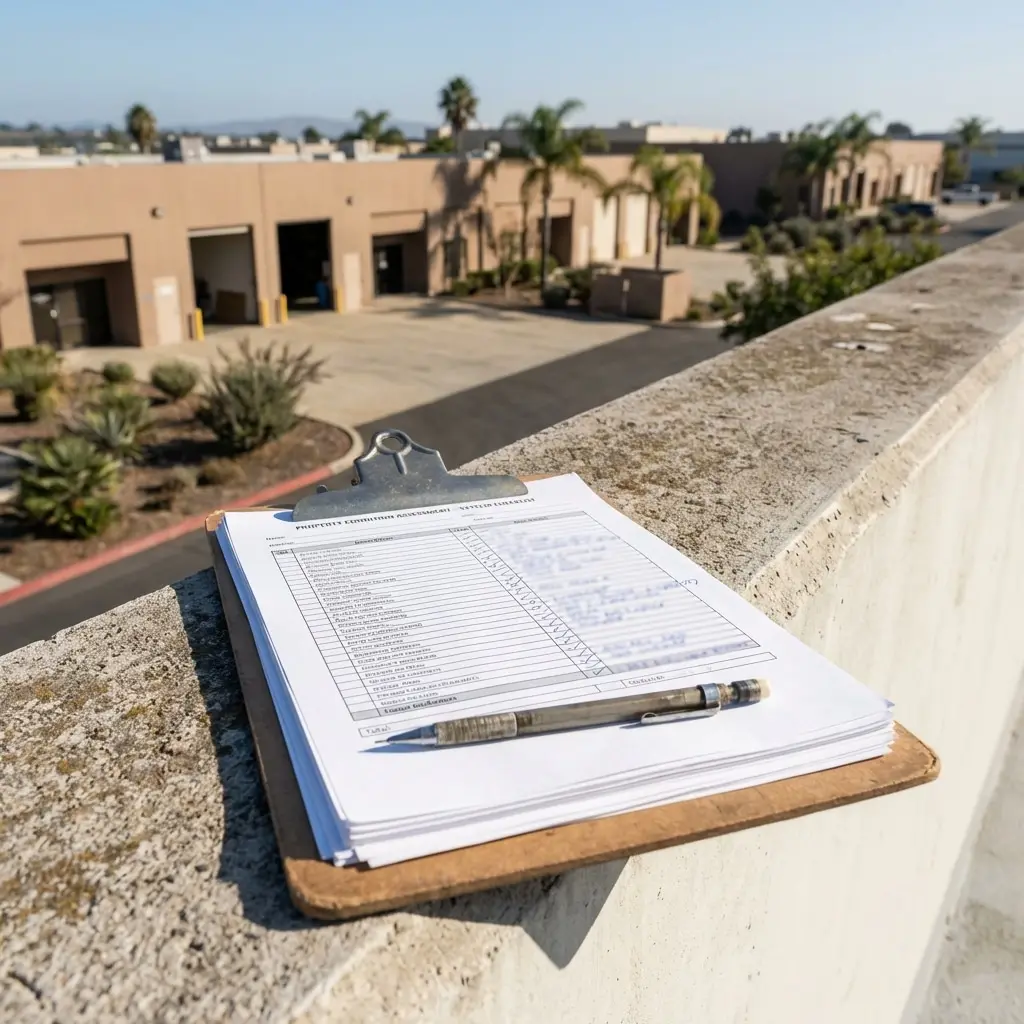
How Ownership Strategy Should Influence Maintenance Decisions
Not every commercial property owner has the same objective.
One investor may intend to hold a property for twenty years. Another may be preparing for disposition within eighteen months. A family office may prioritize preservation, stable income, and generational ownership. A partnership may be evaluating renovation and repositioning. A fiduciary may need to stabilize a commercial asset while determining whether it should ultimately be held or sold.
Those different objectives should influence capital decisions.
Consider an HVAC system with remaining useful life but increasing maintenance requirements. A long-term owner may determine that replacement with newer equipment makes sense as part of a broader modernization strategy. An owner preparing for disposition may reach a different conclusion. Neither decision is inherently right or wrong.
The answer depends on property condition, economics, risk, market positioning, available capital, and ownership timeline. This is why maintenance cannot be completely separated from asset strategy.
A Five-Question Framework for Better Maintenance Decisions
When a meaningful building issue arises, ownership and management can evaluate it through five questions.
What Is the Actual Condition?
What do we know about the system, component, or problem?
02What Is the Risk?
What happens if ownership postpones the work or allows the component to fail?
03What Are the Reasonable Options?
Maintain it? Repair it? Monitor it? Partially replace it? Fully replace it?
04What Are the Economics?
What does each option cost today, and what are the likely operating and capital implications tomorrow?
05How Does It Fit Ownership Strategy?
Does the proposed action make sense given the anticipated holding period, tenant requirements, capital plan, and investment objectives?
That framework changes the conversation from “how much does the repair cost?” to “what is the appropriate decision for this property?”
Commercial Maintenance Decision Table
| Condition | Initial Approach | Ownership Question |
|---|---|---|
| Low-cost, noncritical component | Repair or allow to run to failure when appropriate | Is preventive maintenance economically justified? |
| Recurring equipment failure | Review condition and repair history | Has replacement become more economical? |
| Major system nearing end of useful life | Inspect and plan | When should this enter the capital budget? |
| Specialty trade issue | Diagnose, then refer | Which qualified specialist is actually required? |
| Deferred maintenance | Assess condition and risk | What are the financial and operational consequences of postponing the work? |
| Significant replacement | Evaluate alternatives and life-cycle economics | Which option creates the best value over the anticipated ownership period? |
Frequently Asked Questions About Commercial Building Maintenance
What is preventive maintenance for a commercial building?
Preventive maintenance is scheduled inspection and servicing intended to maintain building-system performance, identify deterioration, and reduce avoidable failures. The specific program should reflect the building's equipment, operating requirements, manufacturer recommendations, applicable codes and standards, and system criticality.
Does preventive maintenance eliminate major repairs?
No. Building systems have finite useful lives. Preventive maintenance can help maintain performance, identify developing problems, and improve visibility into future capital requirements, but it cannot eliminate eventual replacement.
How does maintenance affect NOI?
Maintenance directly affects operating expenses, but it can also influence energy use, equipment reliability, tenant experience, downtime, and future capital requirements. Simply minimizing current maintenance expense does not necessarily maximize sustainable NOI.
What is the difference between maintenance and CapEx?
Operationally, maintenance generally keeps an existing asset functioning, while capital expenditures generally involve significant replacements or improvements. Tax and accounting classifications are more complex and depend on the facts and circumstances. Owners should consult their accounting and tax professionals regarding significant expenditures.
Should a commercial property manager have in-house maintenance?
There is no universal requirement, but an in-house maintenance capability can provide an effective first line of evaluation and response. Routine issues may be resolved directly, while conditions requiring specialized expertise can be referred to the appropriate contractor. The value is not necessarily in replacing outside specialists. It is in determining when they are actually needed and providing them with better information when they are engaged.
Should a commercial property manager oversee construction?
Property managers commonly coordinate repairs and improvements. Larger tenant improvements and capital projects can benefit from construction expertise, clearly defined scopes, cost review, appropriate contractor selection, and dedicated project oversight.
Is in-house maintenance better than outside vendors?
Neither approach is universally better. In-house personnel can be effective for routine and responsive work, while specialty contractors may be more appropriate for technical trades and significant projects. A flexible model allows the resource to fit the work.
How much should I budget annually for commercial building maintenance?
There is no universal number appropriate for every property. Building type, age, systems, occupancy, service history, deferred maintenance, lease responsibilities, operating hours, and anticipated capital requirements should all be considered. A property-specific budget is generally more meaningful than relying solely on an industry percentage.
When should a commercial building component be repaired instead of replaced?
The decision should consider the component's condition, age, repair history, failure risk, replacement cost, operating efficiency, tenant impact, and the owner's anticipated holding period. Repeated repairs should be evaluated collectively rather than as isolated expenses.
Key Takeaway
Commercial building maintenance is most effective when it functions as part of a broader asset-management process. The strongest programs connect:
Building Condition → Maintenance → Documentation → Financial Reporting → Capital Planning → Ownership Strategy
For commercial property owners, the objective should not simply be fewer repairs or lower maintenance expense. It should be better information, more predictable capital requirements, reliable building performance, thoughtful deployment of ownership capital, and ultimately better-informed decisions about the asset.
The ScottWay Perspective
Commercial building maintenance should not operate independently from property management, financial oversight, construction planning, or investment strategy. Each discipline provides information that affects the others.
Maintenance identifies physical conditions. Construction knowledge helps evaluate problems, solutions, scopes, and costs. Financial reporting shows how those decisions affect property performance. Capital planning anticipates future requirements. Ownership strategy determines how capital should reasonably be deployed given the owner’s objectives for the asset.
At ScottWay Commercial, these functions operate together. Our in-house maintenance capability provides a first line of response for many of the properties we manage.
When a building issue arises, our objective is to first understand the problem and determine the appropriate response. Routine issues may be addressed directly by our maintenance team. When specialized expertise is required, we coordinate the appropriate qualified contractor. The work is then documented as part of the property’s maintenance history, providing additional information that can help identify recurring problems and future capital requirements.
This creates a continuous operating cycle:
Identify → Evaluate → Repair or Escalate → Document → Analyze → Plan
Combined with commercial property management, financial oversight, construction expertise, and strategic asset analysis, this approach gives ownership greater visibility into both the physical and financial performance of the property.
The goal is not simply to repair what breaks. It is to understand the property well enough to anticipate needs, evaluate options, deploy capital thoughtfully, and make better-informed ownership decisions.
Request a Commercial Property & Maintenance Review
If you would like to evaluate the maintenance program, physical condition, operating strategy, or anticipated capital needs of your commercial property, contact ScottWay Commercial to schedule a property review.
ABOUT THE AUTHOR
Morgan Scott
Morgan Scott is a commercial real estate and construction professional and the principal of ScottWay Commercial, a San Diego commercial property management firm serving private investors, family offices, real estate partnerships, and professional fiduciaries.
Sources & References
- ASHRAE. ANSI/ASHRAE/ACCA Standard 180, Standard Practice for Inspection and Maintenance of Commercial Building HVAC Systems.
ASHRAE establishes commercial HVAC inspection and maintenance requirements intended to support thermal comfort, energy efficiency, and indoor air quality. Standard 180 provides a framework for developing and periodically reviewing HVAC maintenance programs. - U.S. Department of Energy, Federal Energy Management Program. Operations & Maintenance Best Practices: A Guide to Achieving Operational Efficiency.
DOE/FEMP discusses reactive, preventive, predictive, and reliability-centered maintenance strategies. The guide cites studies estimating approximately 12%–18% maintenance-cost savings for preventive programs compared with reactive maintenance. Results vary substantially by facility and should not be interpreted as guaranteed savings. - U.S. Environmental Protection Agency, ENERGY STAR. Operation and Maintenance Best Practices.
ENERGY STAR identifies effective O&M practices as a means of reducing operating costs, reducing premature equipment failure and unscheduled downtime, maintaining occupant comfort, and supporting Net Operating Income. It also emphasizes assessment, implementation, documentation, scheduling, and ongoing performance tracking. - Internal Revenue Service. Tangible Property Final Regulations.
IRS guidance provides the federal framework for determining whether expenditures involving tangible property may be treated as repair and maintenance expenses or must be capitalized as improvements, including considerations for building structures and building systems. Owners should consult their tax professionals regarding individual expenditures. - National Institute of Standards and Technology. Building Life Cycle Cost (BLCC) User Guide, NIST Technical Note 2346 (2025).
NIST provides a framework for evaluating building-related capital investments using life-cycle economic analysis rather than initial cost alone.
IMPORTANT NOTE
This guide is provided for general informational purposes and is not intended as engineering, legal, accounting, tax, or investment advice. Maintenance requirements and appropriate capital decisions vary by property, building systems, operating conditions, applicable regulations, and ownership objectives. Qualified professionals should be consulted when appropriate.