
Owners almost always open the conversation with a number. "Is sixty per foot enough?" "Is one-twenty too rich for that floor?" "What are people doing on second-gen office right now?" The number matters. We will get to the numbers. But the per-foot allowance is downstream of a more important question, and treating it as the central question is how owners end up signing leases the bids cannot deliver.
The central question is whether the allowance is funding a defined scope or a vague intent. Allowances written against vague intent in 2026 are landing short of what tenants are picturing. Not by a little. By enough to re-cut the deal sixty days into the build, with the owner usually paying for the gap.
This piece is a working operator's read on where TI pricing actually sits, what is driving it, and how to write the allowance so the math holds when the contractor opens the bid book.
Why the Per-Foot Conversation Misleads

A per-foot number presented in isolation lacks the variables that decide the bid. The same dollar figure can be generous on one floor and meaningfully light on the next. The scope is the variable that resolves the number. Strip the scope out of the conversation and you are negotiating against an average, not against the building.
We see four scope-level variables decide most of the variance:
The existing condition of the space. Second-generation space with usable infrastructure underwrites very differently than shell condition, and "usable infrastructure" is a contractor's read, not a broker's.
The depth of mechanical and electrical work. Anything that triggers a unit replacement, a new zone, or a service upgrade is the single largest non-finish item in most build-outs.
Ceiling height, structural conditions, and accessibility paths. Older inventory frequently inherits constraints that surface on the drawings, not on the tour.
The code triggers the permit will compel. Title 24 energy compliance, ADA path-of-travel work, and Title 19 fire and life-safety upgrades are increasingly attached to TI permits in older buildings. The variance from missing this work in the budget is almost always negative.
A per-foot conversation that does not name these variables is a conversation about the wrong unit.
Four Pressures Holding the Number Up
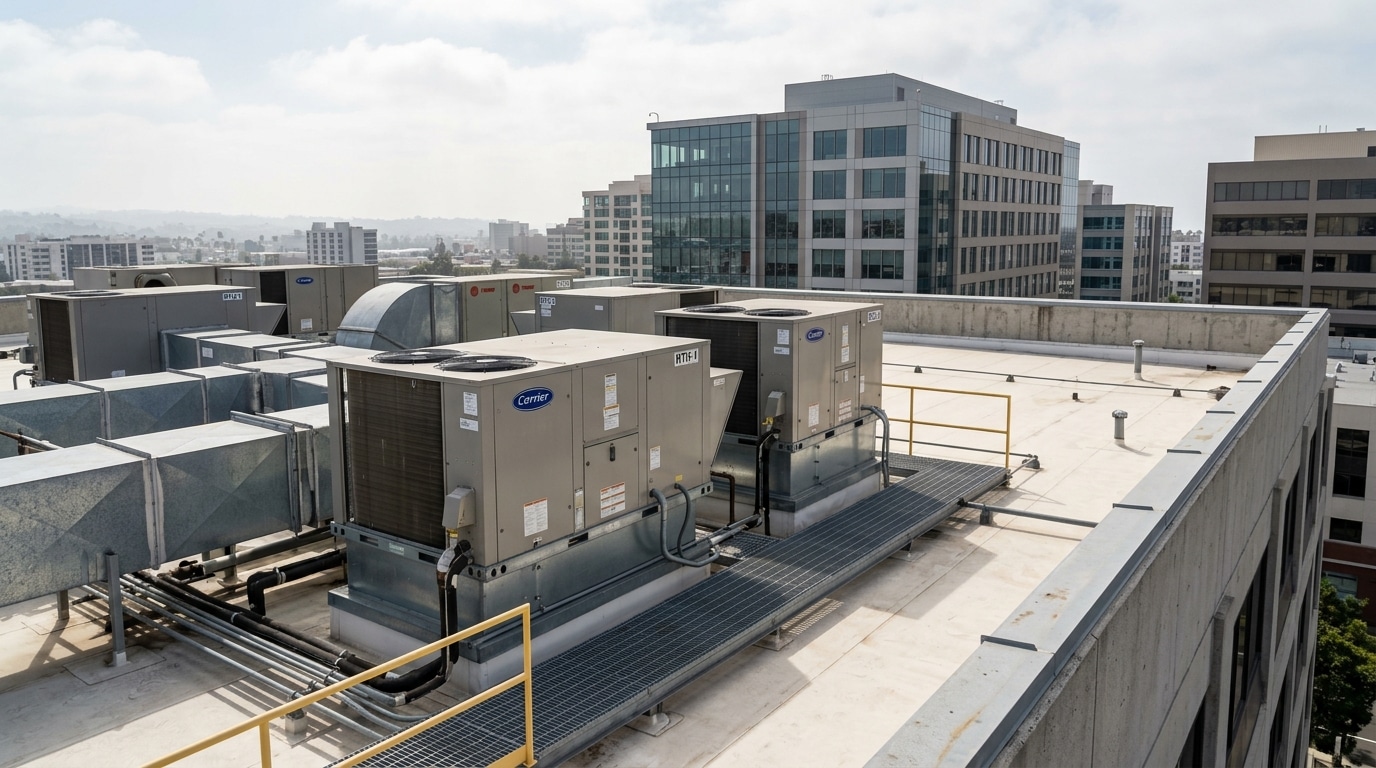
Cost pressure on TI in San Diego is structural at this point, and none of the four big drivers are about to release in the near term.
Mechanical and electrical. HVAC equipment lead times have improved off the 2022 and 2023 peaks, but pricing has not followed them down. Switchgear, distribution, and certain controls remain on extended lead times. Owners are not getting a 2019 number on this work and will not, in our reading.
Labor. The skilled-trade market in San Diego is tight. The trades most exposed to that scarcity (electricians, plumbers, low-voltage installers, HVAC technicians) are pricing premiums into bids that did not exist five years ago. There is no near-term release on this. It is structural.
Code-driven work. As noted above. The point worth stating once more: many scopes price the tenant-specific work cleanly and treat the code-driven work as a rounding error. The variance, when it arrives, is almost always negative.
Materials. Lumber and steel have settled. Specialty glazing, custom millwork, premium finishes, and specialty lighting have not. The lead-time risk is the second-order issue: a finish selected late in the project can push delivery past lease commencement, and at that point the cost shows up as free rent or lost rent rather than as a line on the bid.
What Bids Are Actually Landing At
For owners who want a sighting on per-foot ranges (with all the variability the previous section flagged), here is where the bid book is opening across our office, retail, and industrial work this quarter:
- Second-generation office, light cosmetic refresh (paint, carpet, minor reconfiguration): typically [$25 to $50 per foot, confirm against current GC bids].
- Full second-generation office build-out (new walls, finishes, MEP modifications, some millwork): typically [$80 to $140 per foot].
- First-generation or shell-condition office (full mechanical, electrical, and plumbing build-out from the deck up): typically [$150 to $250+ per foot]. High-end specifications and lab-adjacent build-outs run above that range.
- Retail second-generation (vanilla shell with minor tenant-specific work): typically [$40 to $90 per foot]. Whether food service or grease and vent work is involved drives most of the spread.
- Industrial and flex (office build-out inside an industrial envelope, dock or yard modifications): typically [$40 to $100 per foot] for the office component. Site work prices separately.
These are starting points, not quotes. Two buildings in the same submarket at the same per-foot number can produce very different bids once the scope is on the page.
A Worked Example of the Allowance Gap
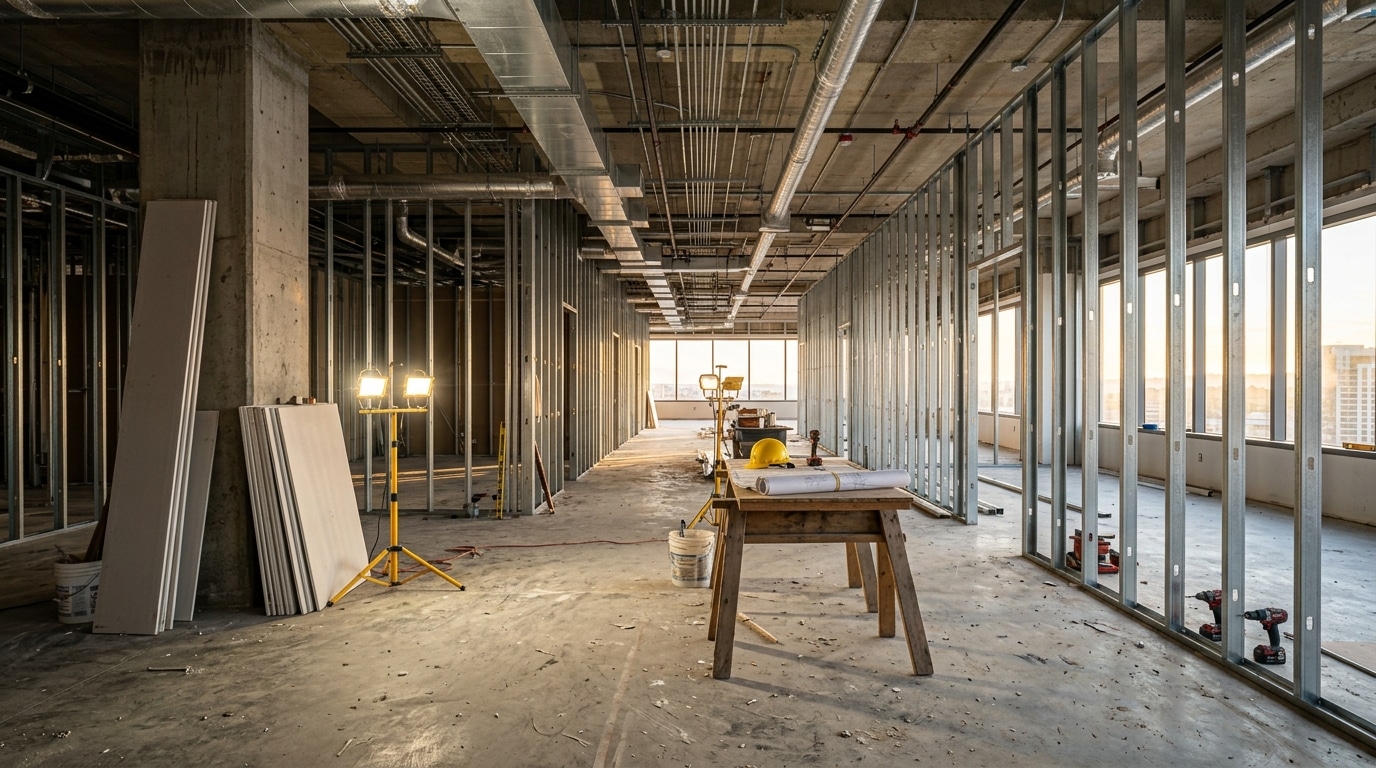
Where this falls apart in practice is between two tables: the lease being negotiated, and the space plan being developed. Different people, different reference points, different vocabulary. The gap rarely closes until the bid arrives, and by then the deal is signed.
The version we see most often plays out something like this. The lease is structured with a [$60 per foot] allowance on second-generation office. The tenant's space plan calls for new private offices, a reconfigured break area, new flooring throughout, paint, and a low-voltage rough-in. The contractor bids the scope at current pricing. It lands at [$95 per foot].
The tenant is now thirty-five dollars per foot short on a space they have already committed to. The conversation that follows is the renegotiation, under pressure, with the negotiating position gone. Usually the owner contributes additional dollars. Sometimes the tenant defers scope. Often both, awkwardly.
The discipline that prevents this is straightforward. Bid the scope before the allowance is finalized, not after. A test fit and a preliminary contractor review at the lease-negotiation stage cost almost nothing and protect the deal from being recut after commencement.
How to Write the Allowance So It Holds

A handful of lease-level moves reduce TI exposure without losing competitive ground on the deal itself. None of them are exotic. All of them work.
Tie the allowance to a defined scope rather than a per-foot lump sum. A lease that reads, "Landlord shall contribute up to $X for the work described in Exhibit C," is materially easier to manage than one that reads, "Landlord shall contribute $Y per usable square foot." The first forces the scope conversation up front. The second defers it.
Carve out tenant-specific finishes from the building-standard allowance. Premium finishes, custom millwork, branded paint, specialty lighting, and tenant-specific data work belong on a separate line, priced and funded separately from the core build-out.
Require competitive bidding. Three qualified bids on the major trades is a reasonable owner requirement, and the bid spread almost always covers the cost of running the process.
Reserve right of approval over the general contractor. A tenant's preferred contractor may be a strong operator, or may not be. The owner has a legitimate interest in the GC's qualifications, insurance, and track record on comparable work. In some cases that interest is satisfied by a pre-approved list.
Time the disbursement. Releasing TI on a percentage-complete basis against lien waivers, rather than as a lump sum at occupancy, materially reduces owner exposure.
Cap unused allowance. Many leases default to letting unused TI dollars convert to free rent. That term has a cost. It should be negotiated, not defaulted into.
A Short Pre-Signing Checklist

Before an owner signs an allowance into a lease, the answers to seven questions should already be on paper:
- What scope does the tenant actually expect to be built? Not the brief outline. The space plan.
- Has that scope been priced at current San Diego pricing, even at a preliminary level?
- What code, ADA, or Title 24 work will the permit likely trigger, and who pays for it?
- Are tenant-specific finishes carved out of the building-standard allowance?
- Who selects the GC, and against what qualifications?
- How is the allowance disbursed, and against what documentation?
- What happens to any unused allowance?
If any of those cannot be answered with confidence before signing, the allowance is being set blind.
Where Construction Visibility Changes the Number
A property manager without construction visibility evaluates a TI bid the same way the tenant does, against the document the tenant's contractor produces. A manager with construction visibility can do something different: pressure-test the bid line by line against current market pricing, identify items that are mispriced or missing, and surface the code-driven scope that the bid has quietly assumed away.
ScottWay carries a CA General Contractor license, #1051408, alongside the CA Real Estate Broker license, #01777939. Every TI scope on the buildings we manage is read through that lens before it goes back to the tenant. The gap between quoted scope and delivered scope is where many leases come apart quietly, and closing that gap is the most direct way to protect an owner's TI dollar.
How We Can Help
ScottWay Commercial reviews tenant improvement scopes, coordinates construction, and oversees capital projects under a licensed General Contractor for the office, retail, industrial, and mixed-use assets we manage and advise on across San Diego County. Owners receive a working bid review, a code-aware read on the scope, and a clear view of where the allowance should land before the lease is finalized.
If you are weighing a renewal, repositioning, or hold-versus-sell decision on a San Diego office asset, we are happy to put a current view in front of you. Call (619) 209-3544 or request a property review at scottwaycre.com.